Fall Protection User Training

A park worker uses a restraint system when cleaning a wood shingle roof.

This class can be taught at your location, request a quote!

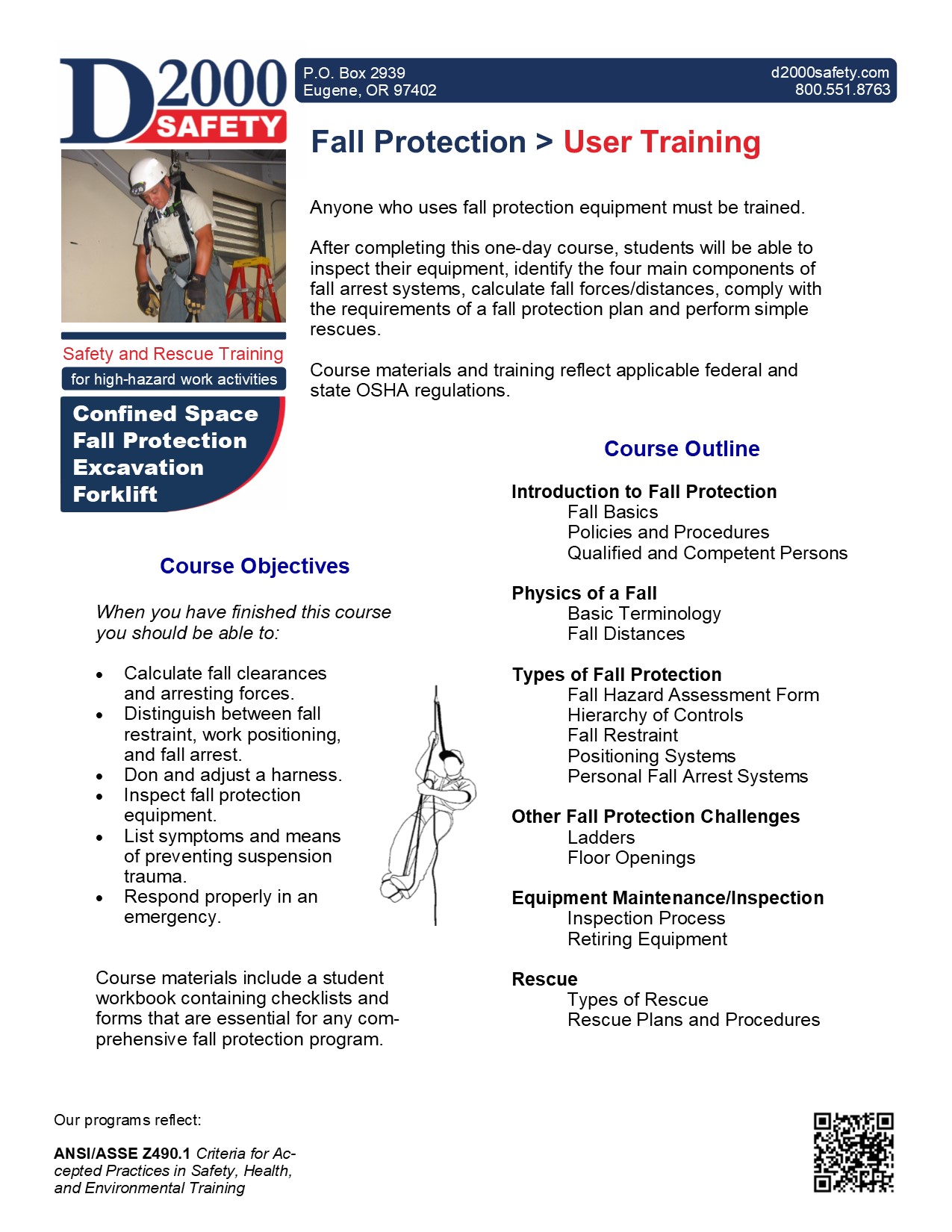
Anyone who uses fall protection equipment must be trained. After completing this course, students will be able to identify the main components of fall arrest systems, calculate fall forces/distances, and perform simple rescues.

Course materials and training are in accordance with all applicable OSHA regulations and ANSI standards.

COURSE OBJECTIVES:
When you have finished this course you should be able to:

  • Calculate fall clearances
  • Estimate arresting forces.
  • Distinguish between fall restraint, work positioning, and fall arrest.
  • Don and adjust a harness.
  • Inspect fall protection equipment.
  • List symptoms and means of preventing suspension trauma.
  • Respond properly in an emergency.

COURSE OUTLINE

Introduction to Fall Protection

  • Curse Outline and Objectives
  • Policies and Procedures
  • Qualified and Competent Persons

Requirements for Work at Height

  • Mental Attitude
  • Physical Attributes
  • Possible limitations/Concerns

Fall Protection Basics

  • Response to Falls
  • Balance and Aging
  • Fall Statistics
  • Competent and Qualified Persons

Physics of a Fall

  • Basic Terminology
  • Fall Distances, Clearances
  • Arresting Forces
  • Swing Falls

Types of Fall Protection

  • Heirarchy of Controls
  • Types of Fall Protection
  • Fall Restraint
  • Positioning Systems
  • Fall Arrest Systems
  • Limitations of Fall Arrest Systems

Anchors

  • Engineered Anchors
  • Improvised Anchors
  • Anchor Straps

Body Harnesses

  • Fitting/Adjustments

Connectors

  • Compatability
  • Lanyards
  • Self-retracting Lanyards

Fall Exposures

  • Falling Objects
  • Ladders
  • Holes and Openings

Equipment Inspection

  • Software
  • Hardware

Rescue

  • Suspension Trauma: Symptoms and First Aid
  • Foot Wrap
  • Basic Assisted Rescue
Print Friendly Version of this pagePrint Get a PDF version of this webpagePDF