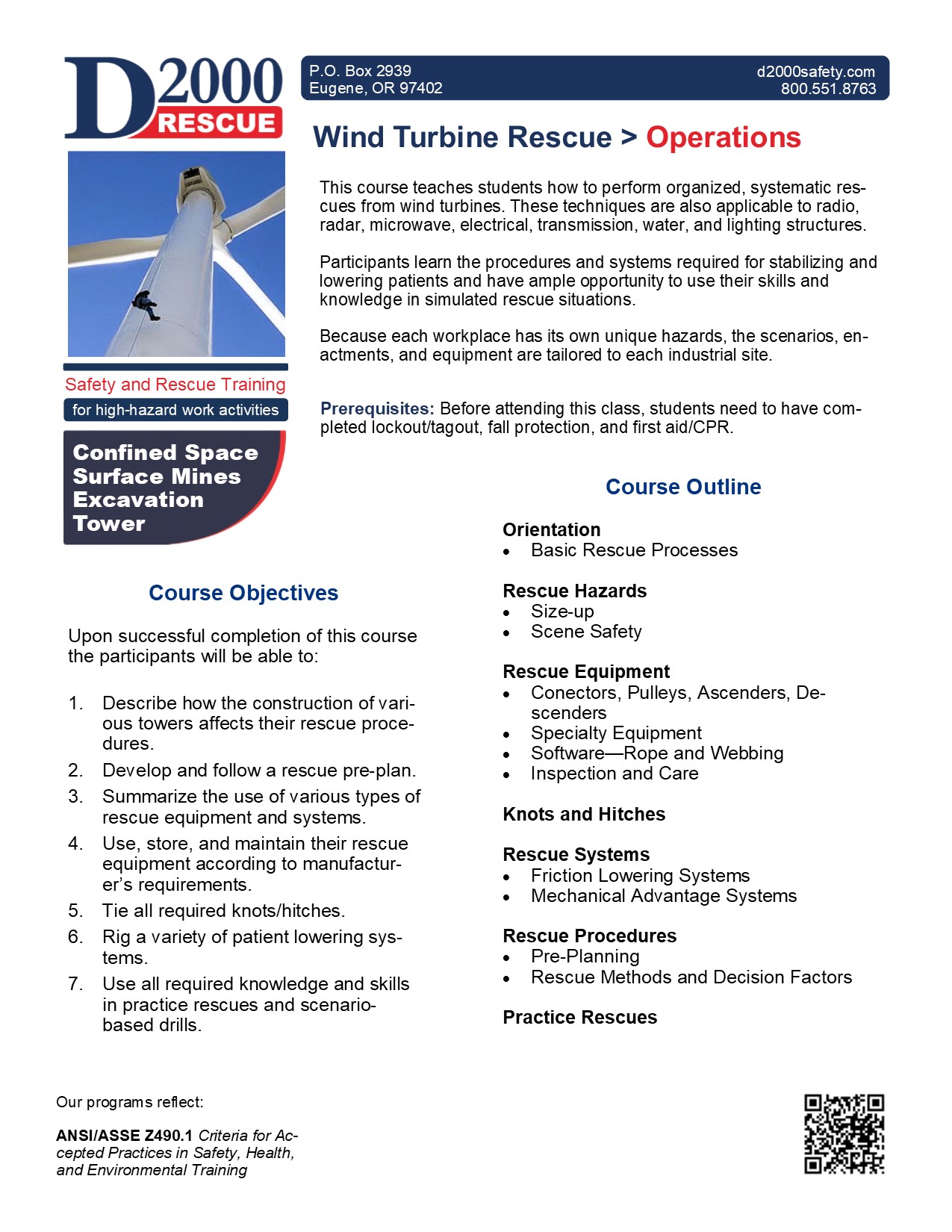
This wind turbine rescue training teaches students how to perform organized, systematic rescues from wind turbines. These techniques are also applicable to other types of towers including radio, radar, microwave, electrical, transmission, water, and lighting structures. This class usually requires three days.

- Performing a mock rescue from the nacelle of a wind turbine on Peter Island in the British Virgin Islands in March, 2012.
Participants learn the procedures and systems required for stabilizing and lowering patients and have ample opportunity to use their skills and knowledge in simulated rescue situations. Because each turbine has its own unique hazards, the scenarios, enactments, and equipment are tailored to each industrial site.
Prerequisites Before taking this class, students must have completed fall protection training. They should also have current First Aid and CPR certifications.
COURSE OUTLINE
Orientation
- Basic Fall Protection
- Rescue Fundamentals
Rescue Basics
- Self-rescue
- Assisted Rescue
- Team Rescue
Basic Rescue Process
- Deploying Equipment and Personnel
- Establishing a Command Structure
- Assessing the Scene/Scene Safety
- Rigging Rope Systems
- Accessing and Packaging the Patient
- Moving the Patient
Rescue Team Structure
- Incident Command System
- Roles and Responsibilities
Mainline Systems
- Anchors
- High Points
- Mechanical Advantage
Belays
- Conditional and Unconditional Belays
- Mainline Failure
Rope System Setup and Operation
- Operating the Mainline
- Operating the Belay
- Communication
- Pre-rigs
- Pick-offs
Equipment
- Tensile Strengths
- Safety Ratios
- Software (Rope and Webbing)
- Harnesses
- Hardware (Carabiners, Pulleys, Ascenders, Descenders)
- Specialty Equipment
- Inspection and Care
Knots and Hitches
- Rescue-suitable Knots
- Family of Eight
- Hitches and Prusiks
- Bends, Bowline, Butterfly
Rescue Procedures
- Pre-Planning
- Rescue Methods and Decision Factors
Practice Rescues
Wind Turbine Rescue Training
As the nation turns to increased wind production, companies face a growing demand for advanced safety and rescue training. Workers who maintain these structures face a variety of safety challenges. Work activities are performed in relatively inaccessible, elevated locations and involve potential energy sources and confined areas. As a result employers often elect to provide a simple means of rescue for workers who may be incapacitated due to an accident or medical emergency.
Show More